Knitting is often thought of as just a hobby, but for many people it can become a way to regulate emotions, settle the nervous system, and cope during periods of stress, anxiety, or low mood.
You might have come across knitting therapy because a clinician suggested it, or maybe you are caring for someone who was suggested to try it. Either way, the idea of knitting as a form of therapy might seem confusing at first.
Although it is not a replacement for counseling or medical care, knitting can still be a useful tool for improving your mental health.
What is knitting therapy?
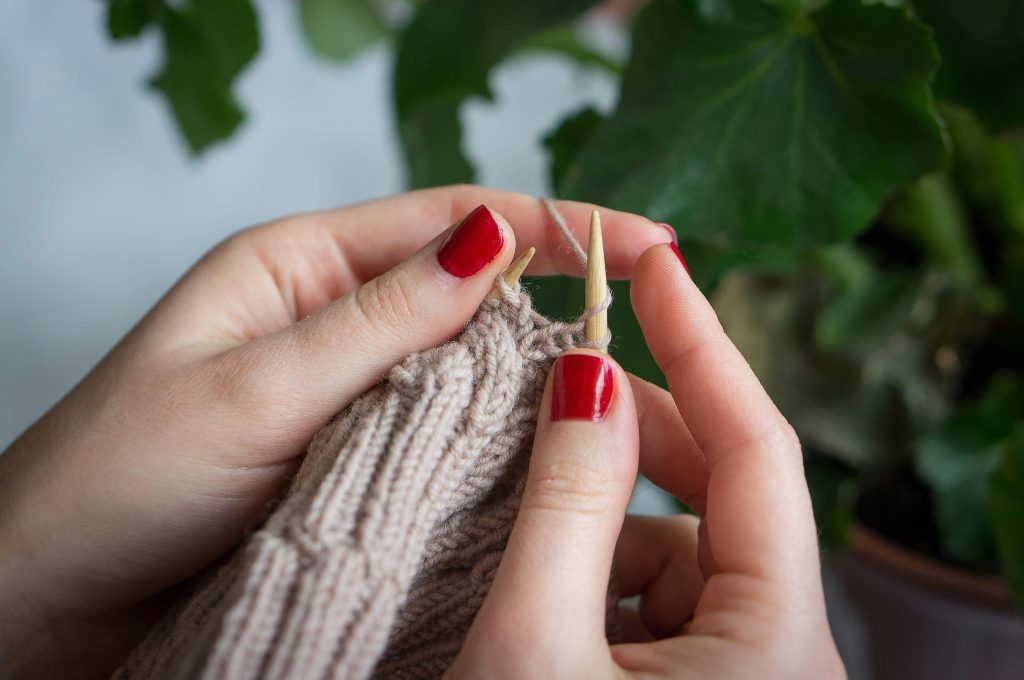
Knitting therapy is not a formal clinical treatment with a fixed program or strict rules. It usually refers to using knitting intentionally to support your emotional wellbeing.
This may look like knitting on your own to manage stress, participating in a group where knitting is one of the activities, or using knitting as a grounding tool during therapy sessions.
Knitting involves repetitive hand movements, concentration, and sensory input from the yarn and needles. Together, these elements can help calm the body, focus attention, and create a sense of predictability through gentle movement, even when emotions feel overwhelming.
Importantly, knitting is not about skill level or productivity. You don’t need to be “good” at knitting for it to be helpful. The benefit comes from the process itself, not the outcome.
Benefits of knitting for mental health
Knitting often affects the body first before you notice any change in your mood. The repetitive hand movements create a steady rhythm, giving your body something predictable to follow.
This kind of repetition helps the body shift out of a constant state of alert. You may experience slower breathing, reduced muscle tension, and a subtle reduction in feelings of anxiety or restlessness.
As your body settles, your mind tends to follow. When knitting, you are generally focused, but not in a way that feels demanding. This can quiet down mental noise and give overactive thoughts less space to dominate.
If you tend to get stuck in loops of worry or self-criticism, keeping your hands busy can interrupt these cycles. The thoughts may still be there, but they often feel less intense and less overwhelming.
Knitting also engages areas of the brain responsible for memory and attention, providing a gentle workout for these neural functions. The repetitive, coordinated hand movements and pattern-following require focus, sequencing, and recall, which may help to strengthen these areas.
What research says about knitting and mental health
Research suggests that people who regularly knit report feeling calmer, and better able to cope with stress. It also suggests that knitting can support emotional regulation and provide a sense of purpose, particularly during periods of depression or low mood.
Some studies have also looked at knitting in relation to cognitive health. Findings suggest that regular engagement in knitting is associated with a lower risk of cognitive decline later in life.
In people who have a mild cognitive impairment or early-onset dementia, research has shown that knitting can engage memory, problem-solving, and attention, helping to maintain skills that might otherwise fade over time.
Knitting has also been compared to mindfulness-based practices, such as meditation. While knitting isn’t meditation in the formal sense, one study suggests it offers similar benefits.
The focused, repetitive nature of knitting encourages present-moment awareness, and may reduce emotional reactivity, particularly for people who find traditional mindfulness exercises challenging.
Who might benefit from knitting therapy?
Although many people find benefit in knitting, it can be especially helpful for certain types of patients, with certain types of problems.
People who struggle with anxiety or chronic stress
If your body often feels tense or on edge, knitting can help calm physical stress responses.
The predictable movements and sensory input give your nervous system a break from persistent worry or stress.
People experiencing depression
Depression can make pleasure and motivation hard to come by. Knitting offers a small, manageable activity where effort can lead to visible results.
The act of showing up and doing something tangible through knitting can help to rebuild motivation in those with depression. Even small amounts of progress can counter the feeling of stagnation that often accompanies this condition.
People coping with trauma
For some trauma survivors, sitting still and ruminating over thoughts and emotions can feel stressful. In this context, knitting can provide a grounding anchor. Your hands stay busy, your attention has a focal point, and your body receives rhythmic input.
This can make it easier to stay present without feeling overwhelmed. That said, trauma responses are highly individual, so knitting may not always feel helpful or enjoyable for everyone struggling to overcome PTSD-related symptoms.
People with early stages of cognitive decline
For people in the early stages of cognitive decline, knitting can help maintain memory and attention by engaging these skills. This can slow cognitive changes and support daily mental functioning.
However, it’s important to note that the positive effects are strongest in people who already learned how to knit before cognitive challenges appeared. This is because learning a new skill might be difficult if cognitive decline is already present.
People who struggle with traditional mindfulness practices
Not everyone finds seated meditation calming. Knitting can offer an alternative way to practice mindfulness without requiring silence, stillness, or intense mental focus.
If you’ve tried meditative exercises and found them frustrating, knitting may offer a more tolerable way to practice mindfulness.
People seeking social connection
Knitting groups, whether informal or based on therapeutic principles, can provide structured social interaction. The shared activity reduces pressure to talk constantly, which can make connections feel easier and more natural.
For people dealing with loneliness or social anxiety, being around other people without added pressure can be especially supportive.
How knitting is used in therapy
Knitting is used in group therapy, occupational therapy, and psychosocial rehabilitation programs. The focus is not on artistic achievement but on regulation, connection, and participation.
Therapists may use knitting as a grounding activity during sessions, especially for clients who struggle with verbal processing. It can also be used as a part of recovery-oriented programs, supporting routine, structure, and social engagement.
Outside formal therapeutic settings, community knitting groups often serve a similar purpose. Even when not used as a formal therapeutic tool, knitting can still offer emotional support, routine, and connection, helping to improve your mental health.
Limitations and important considerations
Knitting is not helpful in every situation. If it becomes a source of pressure, perfectionism, or self-criticism, it can lose its calming effects. It is also not a substitute for professional help when symptoms are moderate to severe.
Knitting works best as a supportive tool, not a solution on its own. If you are unsure if it would be useful for you or someone you care for, discussing this with a licensed mental health professional can be useful.
If you are looking for a therapist who incorporates knitting into their work, you can explore providers using our directory at Counseling.co.